
Medical office cleaning in Oakland
Clean reception areas, offices, corridors and staff spaces for Oakland medical practices.
Welcoming public and administrative areas
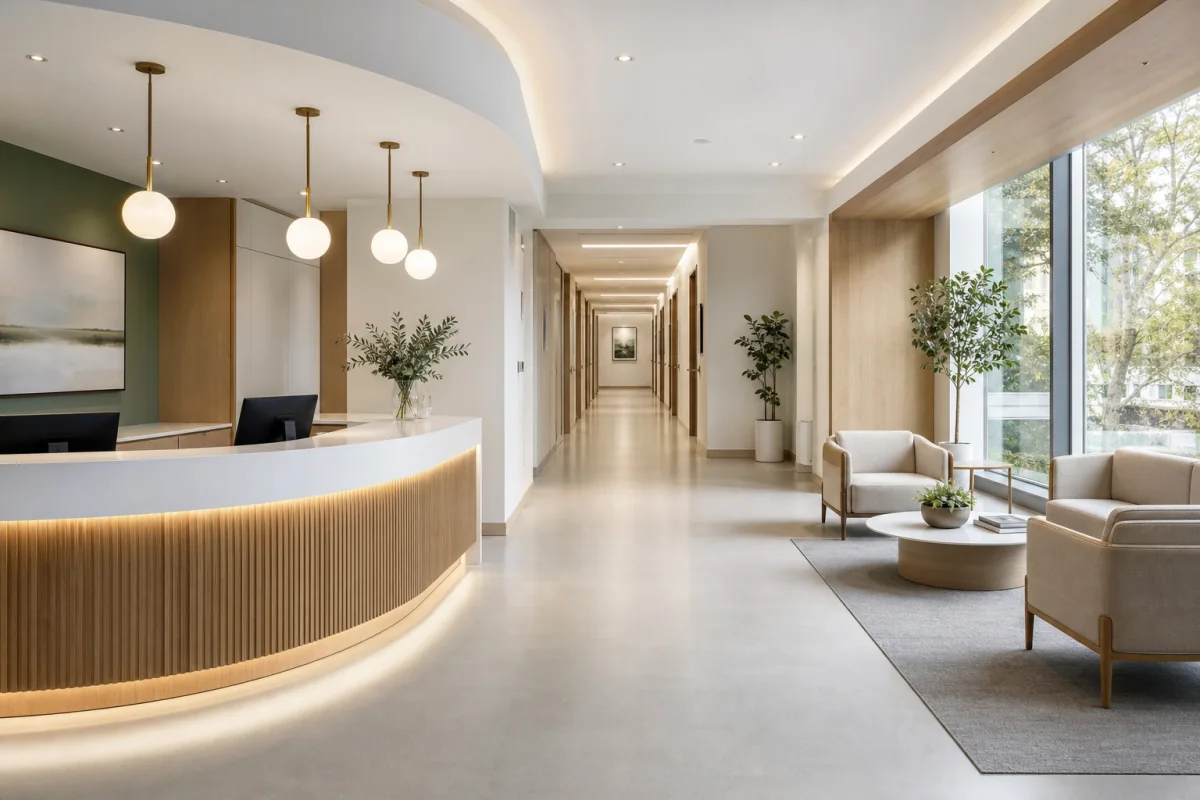
We clean reception areas, waiting rooms, administrative offices and corridors. Routine visits cover shared surfaces and floors so the practice stays presentable for patients.
Restrooms and staff spaces
We clean staff breakrooms, restrooms, entrances and other agreed common areas. Tasks include wiping surfaces, cleaning fixtures and floors, and collecting routine trash.
Clinical areas by agreement
Clinical rooms can be cleaned under their own agreement, which sets the tasks, products, patient occupancy and the practice’s procedures.
Everyday spaces, cleaned routinely
Routine service centers on the spaces staff and patients pass through every day: reception, waiting rooms, offices, corridors, breakrooms and restrooms. Specialized or regulated requests receive their own review before any work is agreed.
Waiting rooms patients notice
Patients notice the waiting room before anything else: the chairs, the floor, the front desk glass and the nearest restroom. Recurring visits keep those spaces clean and orderly, along with the corridors and administrative offices behind them, so the practice looks as well cared for as the people it serves.
Off-hours or quieter-time visits can be discussed when you request a quote, keeping cleaning clear of appointments. Busy practices can add day porter attention for reception and restrooms, and practices in shared buildings can coordinate with commercial cleaning for the common areas.
A few useful answers
Medical office cleaning questions
Which medical-office areas do you clean?
Reception, administrative offices, corridors, staff rooms, restrooms and other agreed public or common areas are supported.
Can cleaning happen outside patient hours?
Off-hours or lower-occupancy service can be discussed. The schedule and availability are confirmed for the practice.
How do I request service?
Use the quote form to identify your practice and the ordinary areas you want cleaned. Identify any clinical rooms separately.
Can day porter service cover a medical waiting room?
Yes. Medical-office public areas can receive routine porter attention during the day.